Nuevos Registros del Helecho Amblovenatum opulentum (Thelypteridaceae) en el Sur de Guatemala
DOI:
https://doi.org/10.36829/63CTS.v12i2.1878Palabras clave:
naturalization, biological invasion, exotic plants, introduced plants, agroecosystemsResumen
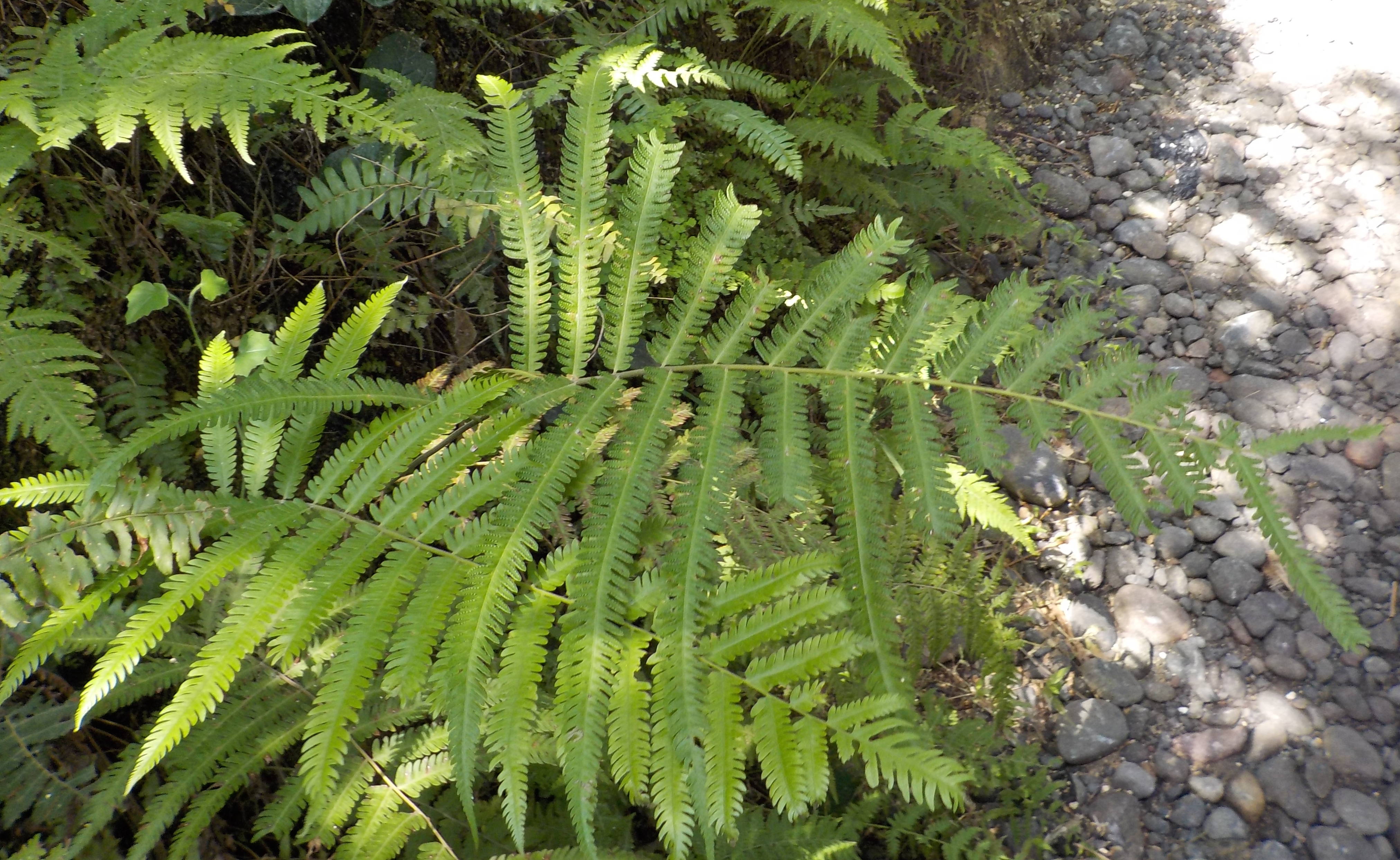
El helecho Amblovenatum opulentum se distribuye originalmente en ecosistemas tropicales del Viejo Mundo. Las actividades de comercio global y el transporte de equipo, materiales y suministros han permitido a distintas plantas colonizar, establecerse y completar su ciclo de vida en nuevos territorios, adicionales a su rango de distribución original, como parte de un proceso biológico referido como naturalización. Se reporta aquí la distribución documentada de A. opulentum en Guatemala como una extensión de su rango en el Nuevo Mundo. Además, se analizan las características de esta planta como introducida, y se estiman sus atributos en cuanto a parámetros de invasión biológica.
Descargas
Citas
Clements, D. R., Upadhyaya, M. K., Joshi, S., & Shrestha, A. (2022). Global Plant Invasions on the Rise. En D. R. Clements, M. K. Upadhyaya, S. Joshi & A. Shrestha (Eds.), Global plant invasions (pp. 1-28). Springer International Publishing. https://doi.org/10.1007/978-3-030-89684-3_1
de MacVean, A. L. de & Zinn, H. (2023). Plantas introducidas a Guatemala. En J. C. Schuster, J. Yoshimoto & J. Monzón Sierra (Eds.), Biodiversidad de Guatemala, Vol. III (pp. 368-384). Universidad del Valle de Guatemala.
Global Biodiversity Information Facility. (2024). Occurrence download https://doi.org/10.15468/DL.SYHXH3
Haufler, C. H., & Ranker, T. A. (Eds.). (2008). Biology and evolution of ferns and lycophytes. Cambridge University Press.
Kew Royal Botanic Gardens. (2024). Thelypteris opulenta | Plant of the World Online. https://powo.science.kew.org/taxon/urn:lsid:ipni.org:names:17460390-1
Lin, W., Zhou, G., Cheng, X., & Xu, R. (2007). Fast Economic Development Accelerates Biological Invasions in China. PLoS ONE, 2(11), Artículo e1208. https://doi.org/10.1371/journal.pone.0001208
Lockwood, J. L., Hoopes, M. F., & Marchetti, M. P. (2007). Invasion ecology. Blackwell Pub.
Ministerio de Agricultura, Ganadería y Alimentación. (2001). Base de datos digital de la República de Guatemala a escala 1:250,000.
Moran, R. C., & Riba., R. (1995). Vol 1. Psilotaceae a Salviniaceae. 1–470. En Davidse, G., Sousa, M. & Knapp, S. (Eds.). Flora Mesoamericana. Universidad Nacional Autónoma de México.
Myers, J. H., & Bazely, D. (Eds.). (2003). Ecology and control of introduced plants. Cambridge University Press.
Rojas-Sandoval, J., Ferrufino-Acosta, L., Flores, R., Galán, P., López, O., MacVean, A., Rodríguez Delcid, D., Ruiz, Y., & Chacón-Madrigal, E. (2023). Flora introduced and naturalized in Central America. Biological Invasions, 25(4), 1007-1021. https://doi.org/10.1007/s10530-022-02968-3
Secretariat of the Convention on Biological Diversity. (2020). Global Biodiversity Outlook 5. Montreal.
Seebens, H., Blackburn, T. M., Dyer, E. E., Genovesi, P., Hulme, P. E., Jeschke, J. M., Pagad, S., Pyšek, P., Winter, M., Arianoutsou, M., Bacher, S., Blasius, B., Brundu, G., Capinha, C., Celesti-Grapow, L., Dawson, W., Dullinger, S., Fuentes, N., Jäger, H., … Essl, F. (2017). No saturation in the accumulation of alien species worldwide. Nature Communications, 8(1), Artículo 14435. https://doi.org/10.1038/ncomms14435
Stohlgren, T. J. & Jarnevich, C. S. (2009). Risk assessment of invasive species. En M. N. Clout & P. A. Williams (Eds.), Invasive species management: A handbook of principles and techniques. Oxford University Press.
Stolze, R. (1981). Ferns and fern allies of Guatemala. Part II. Polypodiaceae. Fieldiana Botany 6, 1-522.
United States Department of Agriculture. (2024). USDA plants database plant profile General. United States Government. https://plants.usda.gov/plant-profile/THOP2
Descargas
Publicado
Cómo citar
Número
Sección
Licencia
Derechos de autor 2026 Jorge Jiménez Barrios

Esta obra está bajo una licencia internacional Creative Commons Atribución-NoComercial-CompartirIgual 4.0.
El autor que publique en esta revista acepta las siguientes condiciones:
- El autor otorga a la Dirección General de Investigación el derecho de editar, reproducir, publicar y difundir el manuscrito en forma impresa o electrónica en la revista Ciencia, Tecnología y Salud.
- La Direción General de Investigación otorgará a la obra una licencia Creative Commons Atribución-NoComercial-CompartirIgual 4.0 Internacional