Efficiency of 3D-printed rosettes for BOD₅ removal in trickling filters
DOI:
https://doi.org/10.36829/08ASA.v20i1.2134Keywords:
trickling filters, 3D-printed rosettes, BOD₅, biofilm, wastewater treatment, additive manufacturingAbstract
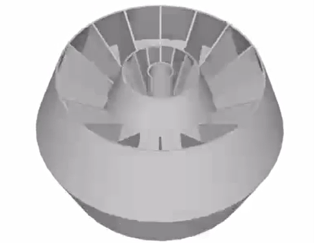
Wastewater treatment requires accessible, efficient, and adaptable alternatives for decentralized systems. Trickling filters remove organic matter through biofilm attached to filter media. This study compared the efficiency of 3D-printed rosette media and commercial rosettes for BOD₅ removal. Two pilot-scale filtration systems were operated in parallel, each configured with three stages in series, under controlled conditions at the wastewater treatment pilot plant of the Regional School of Sanitary Engineering and Water Resources. Over 142 days, ten composite samples were collected from the influent and stage effluents, and BOD₅ removal efficiency was calculated. The 3D-printed rosettes achieved an average removal efficiency of 79.92 %, higher than the 49.08 % obtained with commercial rosettes. They also reduced the final BOD₅ concentration to 72.57 mg/L, compared with 136.29 mg/L in the commercial system, exceeded 50 % removal by day 16, and reached a maximum efficiency of 90.59 % on day 77. The commercial system exceeded 50 % removal between days 119 and 128 and reached a maximum efficiency of 65.96 % on day 142. The largest contribution to removal occurred in the first filtration stage in both systems. These results indicate that 3D-printed rosettes are a technically viable alternative for improving organic matter removal in trickling filters, with potential for decentralized applications and local manufacturing.
Downloads
References
American Public Health Association, American Water Works Association, & Water Environment Federation. (2023). Standard methods for the examination of water and wastewater (24th ed.). American Public Health Association.
Aslam, M. M. A., Khan, Z. M., Sultan, M., Niaz, Y., Mahmood, M. H., Shoaib, M., & Shakoor, A. (2017). Performance evaluation of trickling filter-based wastewater treatment system utilizing cotton sticks as filter media. Polish Journal of Environmental Studies, 26(5), 1955–1962. https://doi.org/10.15244/pjoes/69443
Banti, D. C., Samaras, P., Chioti, A. G., Mitsopoulos, A., Tsangas, M., Zorpas, A., & Sfetsas, T. (2023). Improvement of MBBR performance by the addition of 3D-printed biocarriers fabricated with 13X and bentonite. Resources, 12(7), 81. https://doi.org/10.3390/resources12070081
Cáceres, J. (2012). Implementación de material de desecho PET como elemento filtrante en filtros biológicos. Agua, Saneamiento & Ambiente, 7(1), 18–22. https://doi.org/10.36829/08ASA.v7i1.1461
Dong, Y., Fan, S.-Q., Shen, Y., Yang, J.-X., Yan, P., Chen, Y.-P., Li, J., Guo, J.-S., Duan, X.-M., Fang, F., & Liu, S.-Y. (2015). A novel bio-carrier fabricated using 3D printing technique for wastewater treatment. Scientific Reports, 5, 12400. https://doi.org/10.1038/srep12400
Huamaní Galindo, Z., & Pocasangre Collazos, A. E. (2020). Estudio de coeficientes cinéticos de filtros percoladores por etapas, con medio filtrante de piedra volcánica. Agua, Saneamiento & Ambiente, 15(1), 53–67. https://doi.org/10.36829/08ASA.v15i1.1133
Nyuysoni, S. B., Mutua, J. M., & Home, P. G. (2022). Mathematical model development and 3D printing of cylindrically shaped biofilm carrier media from recycled plastic waste for wastewater treatment. Journal of Environmental Protection, 13, 15–31. https://doi.org/10.4236/jep.2022.131002
Ramírez, S. (2013). Determinación de la eficiencia de la planta de tratamiento de aguas residuales de la Universidad de San Carlos de Guatemala. Agua, Saneamiento & Ambiente, 8(1), 20–24. https://doi.org/10.36829/08ASA.v8i1.1479
Downloads
Published
How to Cite
Issue
Section
License
Copyright (c) 2025 Agua, Saneamiento & Ambiente

This work is licensed under a Creative Commons Attribution-NonCommercial-ShareAlike 4.0 International License.