COD Removal efficiency in a trickling filter using polypropylene bottle caps as filter media
DOI:
https://doi.org/10.36829/08ASA.v20i1.2142Keywords:
domestic wastewater, trickling filter, chemical oxygen demand, recycled polypropylene, filter media, biological treatmentAbstract
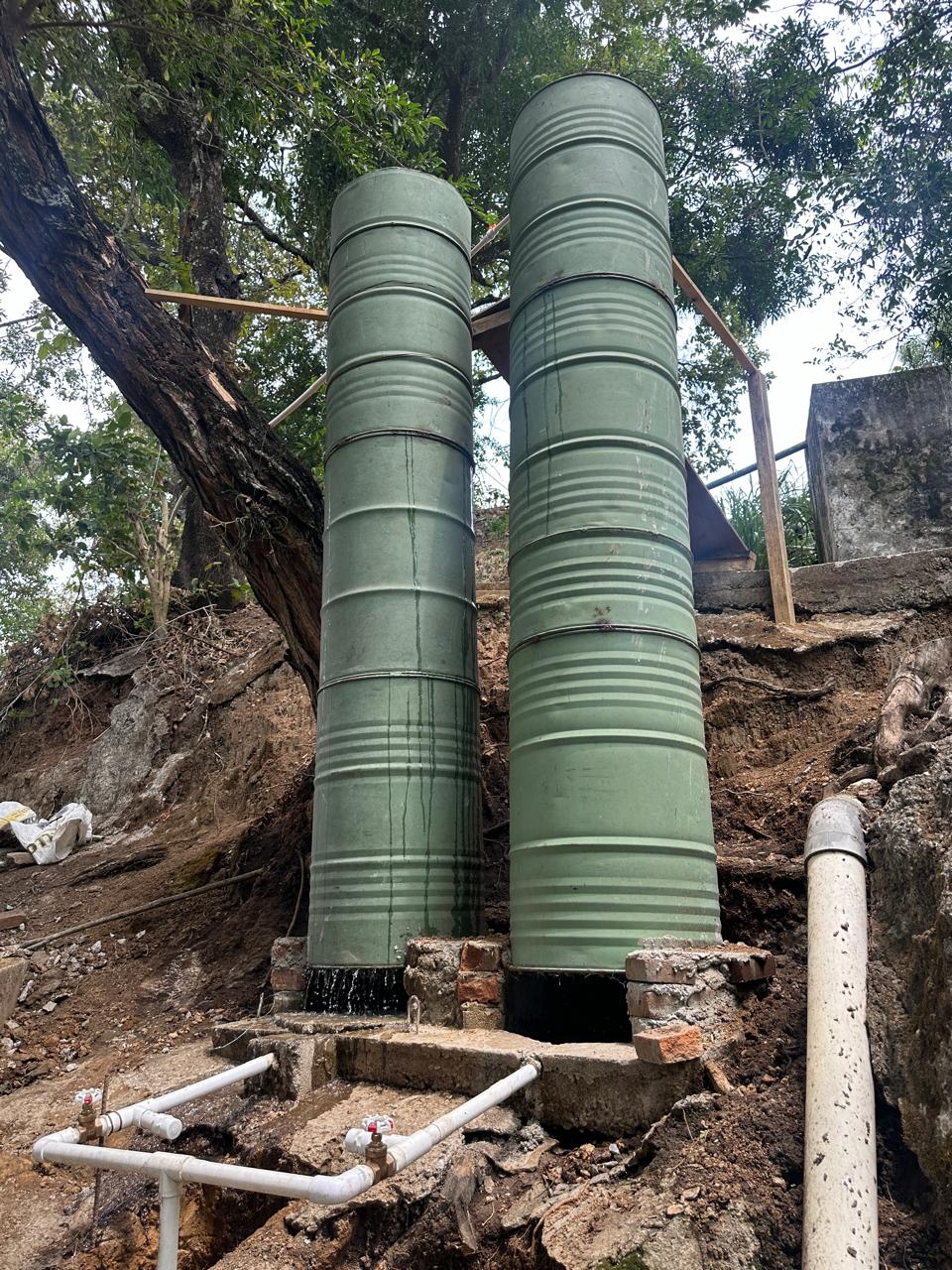
This study evaluated chemical oxygen demand (COD) removal efficiency in a single-stage trickling filter using polypropylene bottle caps as filter media. The experimental unit, measuring 3 m in height and 0.60 m in diameter, operated by gravity without recirculation at the "Ing. Arturo Pazos Sosa" wastewater treatment pilot plant. The filter bed contained 57,312 randomly distributed caps. Influent and effluent COD concentrations were determined in nine sampling events in accordance with Method 106B of Standard Methods for the Examination of Water and Wastewater. Average COD concentrations were 396.22 mg/L in the influent and 195.89 mg/L in the effluent. Average removal efficiency was 50.94% (51% when rounded), with values ranging from 21% to 63%. The average flow rate was 0.085 L/s; its narrow range of variation prevented evaluation of its effect. The filter demonstrated the capacity to reduce COD at an experimental scale.
Downloads
References
American Public Health Association, American Water Works Association, & Water Environment Federation. (2017). Standard methods for the examination of water and wastewater (23rd ed.). American Public Health Association.
Ballesteros, L., Díaz, E., Ortiz, L., Sánchez, M., & Lizcano Sandoval, V. A. (2023). Hydrodynamic evaluation and startup of a laboratory-scale trickling filter (Version 1.0) [Data set]. Zenodo. https://doi.org/10.5281/zenodo.8133136
Cáceres, J. O. (2012). Implementación de material desecho PET como material filtrante en filtros biológicos. Agua, Saneamiento & Ambiente, 7(1), 18–22. https://doi.org/10.36829/08ASA.v7i1.1461
Ginter-Kramarczyk, D., Kruszelnicka, I., Michałkiewicz, M., Muszyński, P., Zajchowski, S., & Tomaszewska, J. (2021). Biofilm on the polymer composites—Qualitative and quantitative microbiological analysis. Journal of Environmental Health Science and Engineering, 19, 641–649. https://doi.org/10.1007/s40201-021-00634-9
Huamaní Galindo, Z., & Pocasangre Collazos, A. E. (2020). Estudio de coeficientes cinéticos de filtros percoladores por etapas, con medio filtrante de piedra volcánica. Agua, Saneamiento & Ambiente, 15(1), 57–67. https://doi.org/10.36829/08ASA.v15i1.1133
Kachhadiya, N., & Patel, U. D. (2024). Low-cost, reliable, and highly efficient removal of COD and total nitrogen from sewage using a sponge-filled trickling filter. Water Science & Technology, 90(3), 665–679. https://doi.org/10.2166/wst.2024.252
López, J. A. (2010). Investigación de la eficiencia de remoción de la demanda química de oxígeno en filtros percoladores de tres etapas utilizando ripio clasificado de concreto. [Estudio especial de maestría, Escuela Regional de Ingeniería Sanitaria y Recursos Hidráulicos, Universidad de San Carlos de Guatemala].
Martins, V. F., Silva, G. J. da, & Borges, A. C. (2021). Effects of packing media and the insertion of vegetation on the performance of biological trickling filters. Water, 13(13), Article 1735. https://doi.org/10.3390/w13131735
Muñoz-Sánchez, D., & Reyes-Mazzoco, R. (2013). Evaluación de la eficiencia de remoción de materia orgánica y nitrógeno en un filtro percolador con nuevo empaque. Revista Mexicana de Ingeniería Química, 12(3), 575–583.
Ramírez Sánchez, O. L. (2012). Investigación de la eficiencia de las etapas en serie de filtros percoladores de la planta de tratamiento de aguas residuales de la Universidad de San Carlos [Estudio especial de maestría, Escuela Regional de Ingeniería Sanitaria y Recursos Hidráulicos, Universidad de San Carlos de Guatemala].
Rehman, A., Anees, M., Sehar, S., Alhewairini, S. S., Saroj, D. P., & Ahmed, S. (2021). Simulated modelling, design, and performance evaluation of a pilot-scale trickling filter system for removal of carbonaceous pollutants from domestic wastewater. Water, 13(22), Article 3210. https://doi.org/10.3390/w13223210
Downloads
Published
How to Cite
Issue
Section
License
Copyright (c) 2025 Agua, Saneamiento & Ambiente

This work is licensed under a Creative Commons Attribution-NonCommercial-ShareAlike 4.0 International License.